Senior Care: Eye Care for Seniors

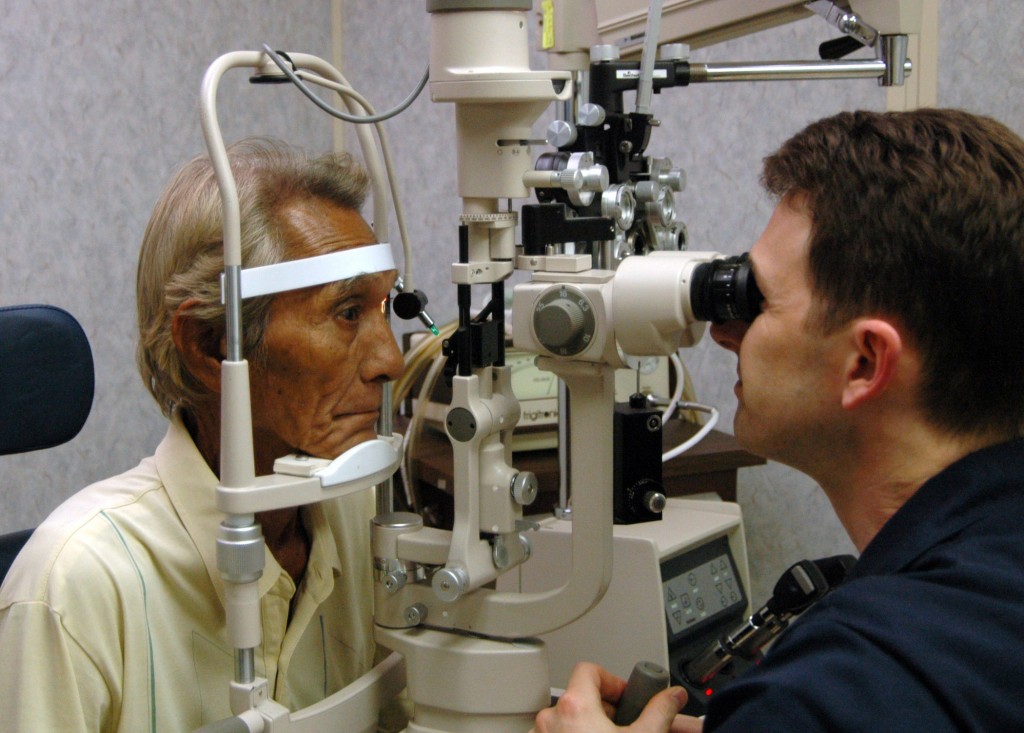
The U.S. Navy Hospial Ship USNS Mercy provides medical care to residents of Zamboanga, Republic of the Philippines

Know what to look for and what to do in order to preserve your eye health.

Normal Vision Development
As we age, even people who do not have age-related eye diseases and who have good visual acuity may experience vision changes. Presbyopia (loss of elasticity of the lens of the eye, occurring typically in middle and old age), which begins in the late 30s or early 40s, usually continues to increase over time.

Seniors may also notice:
Eyes take longer to adjust and focus or don’t adjust very well when a person moves from a well-lit area to a poorly lit area, or the other way around. Such problems in adjusting to light and dark can make driving more difficult, especially at night or in the rain. Driving may be even more challenging for people with eye diseases that reduce their peripheral (side) vision or increase their sensitivity to glare. To be on the safe side, it is recommended that elders consider taking a driving course designed specifically for seniors, drive during daylight hours, reduce speed and be extra-cautious at intersections.

It may become more difficult to distinguish an image from its background when subtle gradations of tone are involved. This is called loss of “contrast sensitivity.”

Interestingly, research has found that the eye’s “rod” cells, responsible for the visual functions described above, are more likely to degrade with age than the “cone” cells, which are responsible for visual acuity and colour vision. The health of rod cells is also more dependent on environmental factors such as nutrition, smoking, and excessive sun exposure, all of which we can control or choose, to some extent.

Vision Screening Recommendations:
It’s important to have a complete eye exam with your Eye M.D. every year or two after age 65 to check for age-related eye diseases such as:

Tips for Eye Health in Adults Over 60:
Women are more likely than men to have glaucoma and women are also more likely to be visually impaired or blind due to glaucoma. Also, women are 24 percent less likely to be treated for glaucoma. Cataract is somewhat more common in women, as well. Women should be sure to follow screening guidelines and adhere to their Eye M.D.’s follow-up appointment recommendations and treatment plans.

Low Vision
The term low vision describes vision loss that makes daily tasks difficult. Normal aging of the eye does not lead to low vision; it is a result of eye diseases, injuries or both. Low vision symptoms include loss of central and/or peripheral (side) vision, blurred or hazy vision or night blindness. A person may have trouble recognizing faces, reading, driving and shopping. If you experience any of these problems, it is important to see your Eye M.D., who will check for and treat any underlying conditions and advise on low vision resources and low vision aids and devices to help with reading and other daily tasks. Most people with low vision need brighter lighting in their living areas.

Avoid Falls and Related Eye Injuries
About half of all eye injuries occur in or around the home, most often during improvement projects (44 percent). The good news is that nearly all eye injuries can be prevented by using protective eyewear, so every household needs to have at least one pair of certified safety glasses on hand.

It’s also important to reduce the risk of falls, which become more likely as we age, due to changes in vision and balance. Consider taking these safety steps around the home to diminish the risks of injuring your eyes:

 Make sure that rugs and shower/bath/tub mats are slip-proof.

 Secure railings so that they are not loose.

 Cushion sharp corners and edges of furnishings and home fixtures.

Systemic health problems

Systemic health problems like high blood pressure and diabetes that may be diagnosed or become more problematic in midlife can also affect eye health. One warning sign of both high blood pressure and diabetes is when the ability to see clearly changes frequently. Be sure to keep your Eye M.D. informed about your health conditions and use of medications and nutritional supplements, as well as your exercise, eating, sleeping and other lifestyle choices.

Exercise – Our eyes need good blood circulation and oxygen intake, and both are stimulated by regular exercise. Regular exercise also helps keep our weight in the normal range, which reduces the risk of diabetes and of diabetic retinopathy. Gentler exercise, including walking, yoga, tai chi, or stretching and breathing, can also be effective ways to keep healthy. Remember to use sun safety and protective eyewear when enjoying sports and recreation.

Sleep – As we sleep, our eyes enjoy continuous lubrication. Also during sleep the eyes clear out irritants such as dust, allergens, or smoke that may have accumulated during the day.

Some research suggests that light-sensitive cells in the eye are important to our ability to regulate our wake-sleep cycles. This becomes more crucial as we age, when more people have problems with insomnia. While it’s important that we protect our eyes from over-exposure to UV light, our eyes also need exposure to some natural light every day to help maintain normal sleep-wake cycles.

Maintain your most precious gift. Contact your family doctor or eye care practitioner and arrange for an eye exam if you have have not done so in the last two years. Early detection of any problems are best caught early on. If you need assistance in getting to your doctor and or making the appropriate arrangement do not hesitate to contact us… we will be happy to support your needs.


Senior Care: Sleep Disorders


Night Sky - Sleeping TimeInsomnia and hypersomnia are associated with mood disorders and depression in particular. In vulnerable individuals problems sleeping should be noted; enabling better sleep can bring significant relief and help cope with the illness.

Sleep disruption is a very common finding in patients with psychiatric difficulties. A large community study found that a much higher proportion of people with insomnia or hypersomnia (sleeping more than usual) have a major psychiatric illness when compared to people who do not have these sleep complaints. Furthermore, when someone has insomnia early in life he or she is more likely to develop depression in later life. Over 70% of patients who are acutely ill with a psychiatric condition have insomnia and unfortunately the sleep disruption may not improve even when the illness is in remission and are known to cause depression. One’s social situation is another important factor, for example, if one is living in poor housing with little income and few social supports, or in an abusive relationship, then there is an increased risk for becoming depressed.

Doctors will usually encourage the use of antidepressant medications first as it can be difficult to take advantage of therapy when one is feeling so low. Psychotherapy can be long-term, looking at the factors from the past that may have resulted in or made one vulnerable to depression, or short-term, focusing more on the current situation and teaching one strategy to deal with the negative thoughts that often accompany depression.

Do psychiatric disorders cause sleep disorders?
Insomnia co-occurs with depression more than with any other illness, either medical or psychiatric. Sleep disruption (insomnia or hypersomnia) is one of the symptoms used to determine whether or not someone is depressed. It is often one of the first signs of an episode of depression, often preceding the onset of low mood and dissatisfaction in people who have recurrent depression. Typically, people have difficulty getting off to sleep, have many awakenings across the night and awaken in the very early morning and cannot get back to sleep. They feel very tired in the daytime and this makes the other symptoms of depression difficult to tolerate. There are some people for whom depression results in them sleeping much more than they normally would. When the sleep of people with a depression is recorded in the sleep clinic, we find that they have a delay in falling asleep, less deep sleep and poor sleep quality. They often have more REM sleep (rapid eye movement sleep, which is when dreaming occurs) and it occurs earlier in the night.

As mentioned above, it may be the case that sleep may not go back to “normal” even when the depression has improved. It is important to pay close attention to sleep hygiene factors, such as eliminating caffeine and keeping a regular sleep-wake schedule. Learning and practicing relaxation strategies can be very beneficial. It may be helpful to do some therapy, such as cognitive behavioural therapy, aimed specifically at treating the insomnia. The more one can work on such strategies when one is well the easier it will be to put them into practice should the depression recur in the future. When there is a history of depression alterations in sleep may signal its recurrence. Getting the insomnia under control as soon as possible will likely improve the course of the illness. Given the strong associations between sleep disruption and depression, it may even be worth considering restarting treatment for the depression at this point before it advances to a higher level of severity.

There is no doubt that sleep disruption often appears when a psychiatric illness develops. This is not surprising since the increased arousal and anxiety that often accompanies such illnesses will make it more difficult to sleep. However, there is evidence that the opposite may be true, that is, insomnia may trigger psychiatric illness or make someone who is vulnerable more likely to have an episode of illness. It may be the case that mental health and sleep are controlled by common brain mechanisms. When these mechanisms are altered or become disrupted, both sleep problems and psychiatric illness may occur.

How do mood disorders affect sleep?
Depression is the most common mood disorder. Approximately 1 in 4 women will suffer from an episode of depression at some time during their lives. The number for men is less but a significant proportion will also suffer from this condition. An episode of major depression is diagnosed when there is a history of feeling sad or not being able to enjoy things as much as usual for at least 2 weeks (often it is much longer than this). This feeling is accompanied by several other symptoms such as having difficulty paying attention and concentrating; loss or significant increase in appetite; insomnia or hypersomnia; having recurrent thoughts about wishing that one were dead or thinking about ending one’s life; not being able to get pleasure out of things previously found pleasurable.

Do antidepressants affect sleep? 
The recording of sleep in the sleep clinic shows that antidepressants have the greatest effect on REM/dreaming sleep, decreasing the amount. Patients sometimes notice that they dream more vividly after starting an antidepressant and in rare cases, nightmares can be problematic. Excessive dreaming may occur during withdrawal from an antidepressant.

What causes depression? 
There are likely many causes. One is a genetic vulnerability. A strong history of depression in a family increases the likelihood that one will have a similar condition. Depression can also result from certain medical conditions such as hypothyroidism, stroke, head injury and HIV. There is evidence that ongoing sleep disruption contributes to depressed moods. Certain medications, for example prednisone can trigger or worse episodes of depression. Unfortunately, antidepressants can cause or worsen restless legs syndrome, periodic leg movements (PLMs) during sleep, and sleep bruxism (teeth- grinding), often resulting in fragmentation of sleep.

What happens to sleep during depression?
The main focus of treatment must be treating the underlying condition, namely the depression. This is done through the use of antidepressants and/or psychotherapy. There are many antidepressants available nowadays and most people are able to find adequate relief from their difficulties. The response to an antidepressant varies greatly from person to person. There are certain antidepressants that almost always make one sleepy and the doctor treating a patient for whom insomnia is a problem may choose one of these in order to help treat the sleep problem. Some doctors, when starting an antidepressant, may also give the patient a short-term supply of a sleeping medication such as zopiclone or lorazepam (especially when anxiety is also causing difficulties). Such medications should be used in the short-term only and should be discontinued when the depression starts to respond to the antidepressant. There is no doubt that enabling someone to sleep if they have been depressed and not sleeping well for some time, can bring significant relief and helps them cope with their illness and even get better. Most antidepressants change sleep. As noted above, some such as mirtazapine are beneficial in that they are sedating and they can, therefore, be taken at night to treat insomnia. Some antidepressants, for example, buproprion, often make one feel more alert and awake. Hence, they are useful when the patient suffers from hypersomnia. Some people find it is more difficult to get to sleep, and complain of sleep disruption, when they first start taking the medication. These disruptive effects usually last for 4-6 weeks and if they persist another medication should be tried or a sleep-promoting agent added.

How to Get a Good Night’s Sleep — Even When You’re Depressed
People suffering from depression and bipolar are usually significantly affected by disrupted sleep patterns. Sometimes spending hours in bed, unable to get out, yet you just can’t sleep. Other times you end up sleeping, but wake up at 4 a.m., your mind racing with all sorts of negative thoughts. It’s not just you, and getting the right amount of sleep as very important… actually… critical to good health.

Depression both causes and is compounded by sleep disruption. The low energy caused by sleep deprivation also affects your ability to treat depression. How on earth can you make and attend appointments with experts, exercise or eat properly when you are perpetually exhausted? And socializing? Don’t even go there — the last thing you want to do when tired is talk to people. But what if you could take control of the situation, finally get a good night’s sleep and enjoy the benefits of restorative sleep and higher energy levels?

With a little bit of willpower and a change in routine, you can do this. Sleep is important. In fact, respondents to my survey of over 4,000 people rated getting a good night sleep number 10 (out of 60) in importance for overcoming depression and bipolar.

So where do you start in finally getting a good night’s sleep?

Sleep Hygiene
In the same way that you maintain personal hygiene through washing your body and oral hygiene by brushing your teeth and flossing, sleep hygiene is a set of practices to follow as a routine, which will yield a good night’s sleep.

As a general point, this is a good idea even for those not suffering from depression, as there are many health benefits to a full night’s sleep. There’s a huge list of practices, which can form part of sleep hygiene, but it’s down to you as to which ones will work best for you.

As a general rule of thumb, though, the aim is to create a routine, which you can follow. The following points reiterate and emphasize the importance of routines & transforming your environment into the most conducive and sleep inducing space possible. Several points to enhance a good night’s rest couple here, but the one I recommend most is the one that is hardest to do:

Use your bed only for sleep
You will find it harder to sleep if you stay in your bed all day, unable to move or act. I know I did. This is because you end up associating your bed with a general state of inertia, rather than the place in which sleep occurs. So even if you transfer to a sofa or somewhere else horizontal to lie all day, this is a very important step to take.

Don’t Force Yourself to Sleep
You can’t will yourself to sleep and getting frustrated at your inability to sleep doesn’t help either… nor does glancing at the clock every few minutes. Try some meditation exercises in bed, such as paying attention to your breath, which will help clear your mind a little and take attention away from the thoughts racing around in your head.

Have a Bedtime Routine
A bedtime routine, regularly followed, signals to your body that it’s time to start winding down, which helps encourage sleep. Things like avoiding upbeat music and stimulants like cigarettes, alcohol and caffeinated drinks and trying a little bit of meditation or yoga, putting on some relaxing music or some lavender essential oil or pillow spray can all help prepare you for sleep.

Maintain the Proper Atmosphere
If your bedroom isn’t a good sleep environment, you’ll find it difficult to relax. A bedroom which is dark, quiet and cool (but not cold) is crucial achieving a good night’s sleep. Too light and you’ll struggle to sleep. Too noisy and you may be awakened by sounds during the night. If it’s the wrong temperature, you’ll be tossing and turning and kicking off the covers during the night. Consider having a fan in the room. As well as helping to regulate the temperature, the ‘white noise’ of the fan’s engine can be a helpful noise to tune in to and help encourage sleep.

Sleep Better, Feel Better, Beat Depression
Once your sleep hygiene improves, you will feel more refreshed and energized and really feel the benefits of a good night’s sleep – and wonder why you didn’t initiate good sleep hygiene earlier! Then you can start making real progress in boosting your mood. You will have the energy and motivation to take action, you’ll also have the practice and experience of making changes to your lifestyle and routine, so you know that you can do it and it is beneficial.

What Other Techniques Can Help Me Sleep?
In addition to trying medications, here are some other tips to improve sleep:

  • Learn relaxation or mindfulness-based meditation and deep-breathing techniques.
  • Clear your head of concerns by writing a list of activities that need to be completed the next day and tell yourself you will think about it tomorrow.
  • Get regular exercise, no later than a few hours before bedtime.
  • Don’t use caffeine, alcohol, or nicotine in the evening.
  • Don’t lie in bed tossing and turning. Get out of bed and do something in another room when you can’t sleep. Go back to bed when you are feeling drowsy.
  • Don’t lie in bed to watch TV or read. This way, your bed becomes a cue for sleeping, not for lying awake.

How is depression and sleep disorders related?
Depression is a mood disorder that is characterized by sadness, or having the blues. Nearly everyone feels sad or down from time to time. Sometimes, however, the sad feelings become intense, last for long periods, keep a person from leading a normal life, and interfere with sleep.

According to the National Institute of Mental Health, symptoms of depression may include the following:

  • Difficulty concentrating, remembering details, and making decisions
  • Fatigue and decreased energy
  • Feelings of guilt, worthlessness, and/or helplessness
  • Feelings of hopelessness and/or pessimism
  • Insomnia, early-morning wakefulness, or excessive sleeping
  • Irritability and restlessness
  • Loss of interest in activities or hobbies once pleasurable, including sex
  • Overeating or appetite loss
  • Persistent aches or pains, headaches, cramps, or digestive problems that do not ease even with treatment
  • Persistent sad, anxious, or “empty” feelings
  • Thoughts of suicide, suicide attempts (if you are thinking of acting on ideas about suicide, call your local 24-hour suicide hotline right away).

Depression in Men
While clinical depression was once considered a “woman’s disease,” more than 6 million men in the U.S. have depression each year. Unfortunately, the lingering image of depression as a female condition may keep men who are clinically depressed from recognizing the symptoms of depression and seeking treatment. Depression actually affects both sexes. It disrupts relationships and interferes with work and daily activities. The symptoms of depression in men are similar to the symptoms of depression in.

There are several reasons why the symptoms of clinical depression in men are not commonly recognized. For example, men tend to deny having problems because they are supposed to “be strong.” And American culture suggests that expressing emotion is largely a feminine trait. As a result, men who are depressed are more likely to talk about the physical symptoms of their depression — such as feeling tired — rather than symptoms related to emotions.

Men are less likely to show more “typical” signs of depression such as sadness. Depression in men may cause them to keep their feelings hidden. Instead of expressing a depressed mood, they may seem more irritable and aggressive. For these reasons, many men — as well as doctors and other health care professionals — may fail to recognize the problem as depression.

What are the consequences of untreated depression in men?
Depression in men can have devastating consequences. The CDC reports that men in the U.S. are about four times more likely than women to commit suicide. A staggering 75% to 80% of all people who commit suicide in the U.S. are men. Though more women attempt suicide, more men are successful at actually ending their lives. This may be due to the fact that men tend to use more lethal methods of committing suicide, for example using a gun rather than taking an overdose of pills.

Is depression common in elderly men?
Although depression is not a normal part of aging, senior men may have medical conditions such as heart disease, stroke, cancer, or other stressors that may contribute to depression. For example, there is the loss of income and meaningful work. Retirement is difficult for many men because they end up with no routine or set schedule to follow. These changes may increase the stress they feel, and a loss of self-esteem may contribute to depression. In addition, the death of family and friends, the onset of other health problems, and some medications can contribute to depression in men.

How is depression in men treated?
More than 80% of people with depression — both men and women — can be treated successfully with antidepressant medication, psychotherapy, or a combination of both. If you are uncertain about whom to call for help with depression, check out the following list from the National Institute of Mental Health:

  • community mental health centers
  • employee assistance programs
  • family doctor
  • family service/social agencies
  • health maintenance organizatios
  • hospital psychiatry department and outpatient clinics
  • local medical and/or psychiatric societie
  • mental health specialists such as psychiatrists, psychologists, social workers, or mental health counselors
  • private clinics and facilities
  • state hospital outpatient clinics
  • university or medical school affiliated programs

Depression is classified as major if the person has at least five of these symptoms for two weeks or more. However, there are several types of depressive disorders. Someone with fewer than five of these symptoms who is having difficulty functioning should still seek treatment for his or her symptoms. Tell your doctor how you are feeling. He or she may refer you to a mental health care specialist.

How Are Sleep and Depression Linked?
An inability to sleep, or insomnia, can be one of the signs of depression (a small percentage of depressed people, approximately 15%, oversleep or sleep too much). Lack of sleep alone cannot cause depression, but it does play a role. Lack of sleep caused by another medical illness or by personal problems can make depression worse. An inability to sleep that lasts over a long period of time is also an important clue that someone may be depressed.

What Causes Depression?
There are several factors linked to depression, including

  • Family history of mental disorders
  • Chemical imbalances in the brain
  • Physical and mental health disorders
  • Environment such as living in a place that is often cloudy and gray
  • Stress
  • Alcohol or drug abuse
  • Medications
  • Lack of support from family and friends
  • Poor diet

How Is Depression Diagnosed?
Your doctor will take your medical history, and will likely ask you whether anyone in your family has depression or other mental health problems. He or she may also ask you to describe your moods, your appetite and energy, if you feel under stress, and if you have ever thought about suicide. Your doctor will also perform  physical exam to determine if the cause of your symptoms is caused by another illness.

What Depression and Insomnia Treatments Are Available?
Treatment choices for depression depend on how serious the illness is. Major depressive disorder is treated with psychotherapy (counseling, or talk therapy with a psychologist, psychiatrist, or licensed counselor), medications, or a combination of the two. Drugs tend to work more quickly to decrease symptoms while psychotherapy helps people to learn coping strategies to prevent the onset of future depressive symptoms.

Medications used to treat depression include antidepressants such as:

  • Selective serotonin reuptake inhibitors (SSRIs), like Zoloft, Prozac, Celexa and Paxil. These medications can perform double duty for patients by helping them sleep and elevating their mood, though some people taking these drugs may have trouble sleeping.
  • Tricyclic antidepressants (including Pamelor and Elavil)
  • Serotonin/norepinephrine reuptake inhibitors (SNRIs) like Effexor, Pristiq, Khedezla, Fetzima, or Cymbalta, that raise levels of both serotonin and norepinephrine — brain chemicals that are thought to be involved in the neurobiology of depression.
  • Novel antidepressants such as bupropion (Wellbutrin)
  • Some of the most effective types of psychotherapy for depression are cognitive-behavioral therapy and interpersonal therapy. With cognitive-behavioral therapy, ptients learn to change negative thinking patterns that are related to feelings of depression. Interpersonal therapy helps people to understand how relationship problems, losses, or changes affect feelings of depression. This therapy involves working to iprove relationships with others or building new relationships.

Sleeping Pills
Hypnotics are a class of drugs for people who cannot sleep. These drugs include Ambien, Sonata, and Restoril. Doctors may sometimes treat depression and insomnia by prescribing an SSRI along with a sedating antidepressant or with a hypnotic medication. However, hypnotic drugs usually should be taken for a short period of time.

The FDA has also approved a prescription oral spray called Zolpimist, which contains the sleep drug Ambien’s active ingredient, for the short-term treatment of insomnia brought on by difficulty falling asleep.

Psychotherapy can also address coping skills to improve a person’s ability to fall asleep… because nothing beats a good night’s sleep.

 

Senior Care: Technology and Seniors


Technology & Seniors2

Forget learning how to program the VCR—the technology seniors have their eyes on today includes mobile gadgets, wireless connectivity and digital devices to enhance their lives and provide themselves with a greater sense of safety and personal support.

There have been ample research studies conducted and statistical results consistently uncovered that: It is a popular concept that technology and seniors can blend together and live in a balanced environment.

Of course, with the challenges of home health care of seniors, it is no wonder that seniors are turning to technology to augment their ability to remain at home longer and regain some of their lost independence. Gone are the days when we would worry about our elderly parents living by themselves. Now, we can simply check on their health status (remotely) as technology aides us.

Naturally, with this increasing trend and available technology seniors can keep themselves in the loop and live out their normal lives with minimal invasion of privacy. If technology can be easily accessed and used by the younger population, seniors can handle technology as well? As a result, seniors now purchase top-of-the-line gadgets like smart phones, tablet readers, home PC’s, portable music players and laptops. Some of these seniors even kick it up a notch and decide to purchase gaming consoles. Truly, technology is slowly breaking new boundaries and making seniors more adaptive to their technological environment.

But then, do these senior citizens take the time to actually learn about these gadgets? While a lot of technological breakthroughs have been beneficial to seniors in terms of rehabilitation and treatment, there is no guarantee that anything a senior citizen wishes to buy will be conducive for his or her wellness, unless he or she chooses to learn about it.

With that in mind, seniors should keep in mind the following tips to ensure they work well with these new technologies.

Get connected because seniors want to, not because they have to
Many seniors face the pressure to be connected to social media platforms. Usually, this pressure is due to the coaxing of their kids who want to connect with them digitally. While it is nice for a senior citizen to set up a Facebook or a Twitter profile, he or she should first examine their reason for connecting on the web. Do they really want to establish that connection and exposure? Or do they do it just to get their kids off their back?

Knowing the reason for using technology is important because the reason has to be powerful enough for the senior to push through with the learning process. As long as the seniors who use technology learn about it in order for them to message their loved ones easily, you can be sure that they will be more than willing to learn.

 Be willing to invest for convenience
Seniors should do well and not dwell on the price of technological gadgets. More often than not, a lot of cheap gadgets are acceptable, but they are not necessarily the best.

Seniors should go ahead and skip on asking about the price – they should focus on the features of the gadget instead. Will it be convenient to use? Is it senior-friendly? Will it meet their lifestyle needs? Does it have ease of access features? Will it be supported and around for the long term?

Ask advice from the best resources – the senior citizen’s family.
Usually, it’s better for a senior to ask a family member to help them set up their gadgets. Talking to customer service representatives is a bit difficult because these agents follow a script – sometimes, these scripts can’t be customized to be understood by the casual technological consumer (this is not simply a senior challenge).

Finding a teenager relative who can explain it in simpler terms will yield better results. Don’t be afraid to ask for their explanation and advice – they’re your family (or connect with a Home Care Service provider who can safely facilitate this on your behalf).

Yes, technology exists and it is interesting to dabble in it. At the end of the day, what really matters is if a senior was able to learn how to use it and benefits from it.

So now that we’ve briefly discussed how technology can effectively interface with our senior generation…Is Grandma going gadget-crazy? Not quite yet? Yes? According to a 2012 survey by Pew Research: The number of older adults using the Internet and related technological devices are increasing, with over half of seniors using the Internet and owning smart phones. Realistically, there’s still a long way to go before we can consider ourselves, or our senior citizens to be fully tech savvy. The fact is, today’s technology can keep us engaged, connected, mentally active, physically safe. Thus making it increasingly important for our loved ones to keep themselves in the high-tech loop. So what devices should seniors and their caregivers have their eye on?

Must-Have Technology for today’s Senior:

  • Tablets and iPads: From games that promote brain fitness to apps that track personal health information, tablet can have a variety of positive impacts on seniors’ lives. Seniors can view photos, listen to music, read, learn languages—plus these devices are lightweight, their touch screens are easy to use, and font sizes can be adjusted for easier reading.
  • Hearing aids: Having to wear a bulky listening device is no longer an excuse for older adults to go without hearing aides. The continuing miniaturization of hearing devices and the improvement of wireless transmission methods like Bluetooth has meant great strides in hearing assistive technology. Hearing aides can be tiny, transparent, and nearly invisible—or even implanted inside the ear itself.
  • Video and computer games: Whether it’s a sporting video game, arcade games, Angry Birds, or the Nintendo Wii, video games have been shown to improve cognition, mental agility, and even physical health for seniors, with devices such as the Wii Fit. Not only that, video games can promote social interaction.
  • Skype: Speaking of social interaction, one piece of software every senior should get familiar with is Skype. Communicating with family long-distance is a snap, you can view your loved ones in real time, and it’s available for smartphones, tablets, and regular computers.
  • Health tracking software: If your senior loved one has a computer or a mobile device, they should be aware of the wealth of software features and apps available to help monitor their health, remind them of their medications, track their nutritional needs and empowering them to take charge of their own wellness. It’s a branch of technology that’s invaluable for caregivers, too.
  • Wireless Internet: Most of the technologies on this list wouldn’t be possible without wireless Internet. If you want your senior parent to take full advantage of these devices, make sure their residence is internet-ready. Even nursing homes are now using wireless Internet technology to make it easier for residents and care providers to communicate quickly.
  • Smartphones: Cell phones are becoming more senior-friendly, with models that have larger buttons, larger font features, readouts as well as photo speed dialling and voice command to make usage easier. Not only are cell phones crucial to helping seniors stay connected with friends and family, they may also help perform critical safety functions like providing medication reminders and GPS locations.
  • Wireless home monitoring: Home monitoring systems that employ sensor devices can be, literally, lifesavers for those seniors who live alone, either at home or in an assisted living environment. They can detect emergencies such as falls, report unusual behaviour, and even track vital signs—without intruding on privacy.
  • GPS: If you’ve got a senior loved one who is concerned about getting lost, or who has dementia and occasionally wanders, GPS technology can immediately alert caregivers to their location if they leave their comfort zone. There are separate GPS trackers that attach to the wrist or clothing, as well as smartphone GPS apps.
  • Home assistive devices: Assistive technology in the home can go far in helping seniors remain independent and safe in their own homes. Besides home monitoring and GPS, there are devices such as LED lighting, medication dispensing appliances, photo-enhanced phone diallers, and stove shut-off systems, all of which can help seniors with mild cognitive and motor impairment.

While these technologies and devices do enhance the lives of our elderly and allowing them to remain in their homes for as long as possible, certainly are not aimed at replacing the role of routine caregivers altogether. Technology is to be use in conjunction with caregiver visits to ensure devices are being used and functioning appropriately. As conditions of the Clients change so must the range of technologies and care giving services.

We, at In Our Care – Home Care Services can determine what technology is best suited for you depending on your current challenges, goals and objectives. Talk to us about it, your in-home assessment is at no cost and may identify simple solutions to enhance your daily life, promote increased personal safety and peace of mind. Our ultimate objective is to help you remain independent, protected, safe, and in you home / community.

You got questions, we have answers: (905) 785-2341 or email us at homecare@inourcareservices.com


Senior Care: Oral Health for Seniors

Senior Oral Care1

Dentures do not have to be a fact of life. With proper oral hygiene, many seniors are keeping their natural teeth healthier and longer than previous generations. A healthy mouth is important for maintaining quality of life, especially for the sick, the elderly and residents in long-term care homes. For those wearing full or partial dentures, it is still important to have a clean mouth and to get regular check-ups to prevent oral health problems.

Please do ask us any questions that you may have with respect to your oral health and update us on any changes to medications that you may be taking. If you are caring for an elderly parent, ask about ways for you to support their oral health care.

Staying healthy and looking good are two main wishes of today’s seniors. To achieve the health component it is important to maintaining an active lifestyle combined with a routine exercising and eating right. Equally important is good oral care of teeth and gums. Simply by brushing twice a day with fluoride, toothpaste and flossing daily seniors can avoid many oral health problems. Regular dental checkups and having their teeth professionally cleaned are also important.

As we age, subtle to serious changes occur in the mouth, gums and teeth. Teeth may lose their whiteness and darken in colour as we age. Also, plaque a colourless layer of bacteria builds up on teeth faster as we grow older. The risk of gum disease also is higher as we grow older. The bacteria found in plaque create toxins that inflame the gums and cause gum tissue to separate from the teeth. Left untreated, gum disease may damage the bone that holds teeth in place, possibly causing tooth loss. Other factors contributing to gum disease are dentures that do not fit, poor oral hygiene, illnesses and many medications. More than 400 prescribed drugs, many popular with seniors, can interfere with good dental health. Seniors should let their dental professional know what medications they are taking.

Oral health is an important part of overall health. Most people don’t connect their mouths to the rest of their bodies. There is growing evidence linking periodontal (gum) disease to a variety of serious health conditions including heart disease, stroke and respiratory disorders. Diabetes and oral health are also connected. Gum disease may worsen existing diabetes or increase complications associated with diabetes. Regular professional cleanings, proper diet and a diligent homecare program are recommended to reduce the risk of cavities and gum disease.

General oral concerns among seniors

Dry Mouth (xerostomia): 
Dry mouth is caused by reduced saliva (spit) flow, which can lead to tooth damage, but can also affect chewing, speaking, swallowing and ability to taste. This condition can also be caused by medications (see Medications on this list). Saliva helps wash away acids caused by plaque. Saliva also contains minerals that rinse tooth surfaces and keep them strong. When saliva flow is in short supply, teeth can decay more easily. To help relieve dry mouth, sip water throughout the day, chew sugarless gum or suck on sugarless mints, or use oral lubricants available over the counter.

Cavities & Decay:
Due to the lack of fluoride when many of today’s seniors grew up, they had a higher tendency to develop tooth decay at a younger age, and consequently have more fillings than many of today’s younger population. Two types of decay or cavities are prevalent in adults. Root decay and decay at the edges of fillings. Cavities in older adults appear most frequently on the roots of the teeth at the gum line. Years of brushing too hard and the natural effects of aging can cause gums to recede, exposing the roots of the teeth, which are more susceptible to decay because they are not protected by enamel. Tooth or root decay is caused by bacteria (plaque), which should be removed thoroughly on a daily basis. Decreasing food and beverages high in sugar will also help to reduce cavities.

Periodontal Disease(gingivitis and periodontitis):
Periodontal disease is one of the most common diseases in humans. Over time, a build-up       of bacteria or plaque on the teeth can cause inflammation of the gums that can spread to the underlying bone and lead to tooth loss. Swollen bleeding gums, loose or shifted teeth, bad breath and gum recession are signs of periodontal disease. It is important to keep teeth and gums as plaque free as possible with professional cleanings and daily brushing and flossing.

Oral Cancer:
The incidence of oral cancer is higher among seniors. Regular dental visits can help to spot early signs of oral cancer and pre-cancerous conditions. Dental professionals perform regular screening for oral cancer. However, between visits, individuals should check their mouths and watch for red or white patches, sores that do not heal after a few days, swelling or changes in colour. Also, check lips, all areas of the tongue, gums, palate, floor of the mouth and inside the cheeks. Report any changes to a dental professional. For a variety of reasons, many older adults are more susceptible to oral diseases, including oral cancer. About 95 percent of all cancers are found in people over age 40. Again pointing to the importance of a regular dental checkup, dentists can examine oral tissues for cancerous or pre-cancerous lesions. As with all cancers, early detection is key to survival.

Medications:
Prescribed medications that contain sugar can cause dry mouth, both of these factors that can influence oral disease. Common medications contributing to dry mouth are anti-depressants, anti-histamines, pain medications and cancer therapies… just to name a few. It’s important to tell your dentist about any medications you are taking and other possible symptoms, such as abnormal bleeding, taste alterations and soft-tissue symptoms like swelling and discoloration.

Diet:
Unfortunately, many seniors may begin to experience mouth or teeth problems that make them less likely to consume a healthy diet, which further leads to a negative impact on oral health. Some of the reasons for this include a decrease in appetite, physical disabilities, dementia, such as Alzheimer’s, or untreated tooth decay. All the more reason if possible to for our aging population to try and keeping their natural teeth longer in life. By virtue of being able to use their teeth, seniors make better nutrition choices, allowing them to continue to enjoy a wide variety of foods that further support ongoing oral health.

Health conditions:
While diseases of the mouth and surrounding areas are a serious health risk, their relationship to overall general health is often not considered important or is simply overlooked. Gum disease that is left untreated can lead to an increased risk of diseases of the respiratory system. This is primarily caused when the toxic bacteria that are contained in plaque make their way from the mouth to the lungs. The result is either respiratory infections or worsening of already existing cardiovascular conditions. Seniors that have diabetes are more susceptible to experience the affects of periodontal disease. Diabetics with uncontrolled gum disease are therefore more susceptible to tooth loss. Seniors that may have compromised immune systems due to existing chronic ailments or medications are more susceptible to getting fungal and viral infections of the mouth.

Sensitive Teeth:
A high percentage of our senior population, complain of experiencing tooth sensitivity. The sensitivity is usually the result of a lifetime of wear and tear of the teeth and gums caused by factors such as brushing too aggressively, lack of oral hygiene leading to receded gums and overall gum disease, broken and fractured teeth, bruxism (grinding of teeth), acidic foods and complications resulting from certain dental treatments. The triggers for tooth sensitivity can be anything from thermal stimulation (hot or cold foods or drink), sugary or acidic foods, even just breathing in cold air.

Dentures:
Many seniors who have lost some or all of their teeth are wearing removable dentures to replace those missing teeth. The proper care and maintenance of these partial or complete dentures is paramount to maintaining the health of the mouth. Poorly fitting dentures, and those that are not removed regularly to allow oral tissues and existing teeth to be adequately cleaned, can lead to further dental and oral tissue problems. Seniors that wear dentures are advised to continue regular dental visits to ensure proper fit and function of their dental prosthesis.

Dental Implants:
Dental implants are a popular and successful alternative for replacing missing teeth. They are special titanium posts that fuse directly to the bone and, unlike some procedures, do not destroy other teeth. An implant is treated like a natural tooth but is not as strong, so it is important to brush and floss gently. As the trend toward implants escalates, so too does the specialized knowledge required by the dental hygienist to advise clients before, during and after choosing implants.

Tips for seniors and caregivers:

  • Regular dental visits are a perfect time to speak to the dentist about concerns that you may have with regards to your oral health (or that of someone under your care) and will help to spot trouble early. It is also a time to update the dentist as to any medical issues or medications that you may be taking that could adversely affect your oral health.


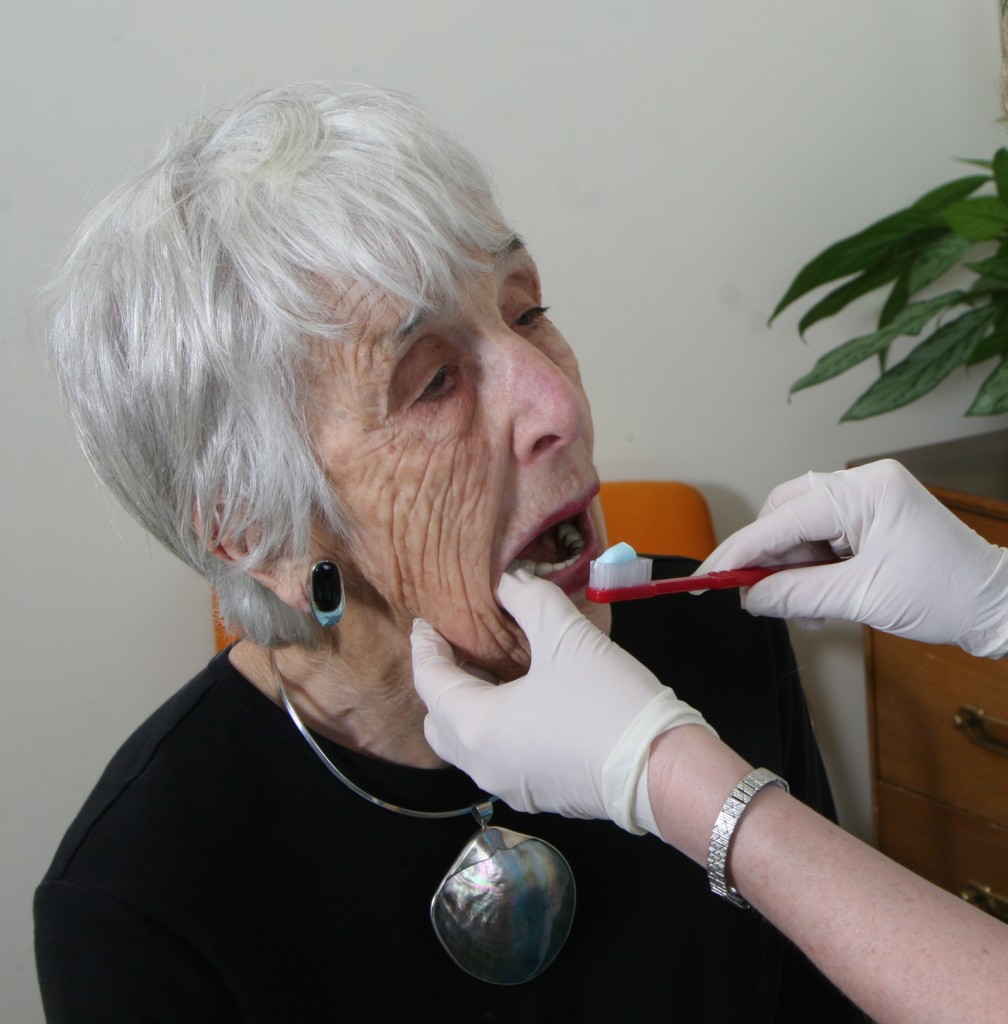
  • Brush, floss and rinse. Brush natural teeth twice a day with a soft toothbrush and fluoridated toothpaste as instructed by your dentist or dental hygienist. Always choose a soft toothbrush, run the bristles under warm water so as to further soften the brush against gum tissue, and remember to replace worn brushes every 3 to 6 months.

If your suffer from any condition that makes holding the toothbrush a challenge (e.g. arthritis or any other health conditions), speak to your dentist or dental hygienist about other options and consider these tips:
    1. Use an elastic band to attach the toothbrush handle to the hand
    2. Enlarge the toothbrush handle for a wider grip
    3. Use an electric or battery powered tooth brush
    4. Use disposable floss picks for flossing.
    5. Rinse with fluoridated mouth rinse to decrease cavity susceptibility, if recommended by a dental hygienist.
  •  Denture care, for your dentures. To avoid accidental breakage should they fall, make sure to have a folded towel or fill your sink with water over which you handle your denture. Avoid letting your dentures dry out. When not worn, do not simply leave them out exposed to the drying affects of air. Remember to soak them in a glass with water or a denture cleaning solution. Never place your dentures in hot water, as that will cause the denture material to warp. Brush, clean and rinse your dentures daily. Dentures, full and partial, accumulate food and plaque and need to be cleaned. Dentures should be brushed thoroughly to loosen food debris and reduce odours. Do not use toothpaste or cleansers that can scratch, and never use bleach to clean or soak dentures as it. Commercial denture cleaning solutions do not replace the need to manually brush dentures. Dentures should be brushed thoroughly twice a day using warm water and mild soap or denture paste. When not wearing dentures or at night, soak them in water or a denture cleaning solution to prevent drying. After any soaking, rinse dentures in warm water. Denture cleansers may be toxic if ingested. They should not be gargled or swallowed.

Proper care of dentures can extend their life and contribute to a healthy mouth. The average life span of dentures is five to seven years. Dentures may need to be relined or replaced as the mouth changes with age.

Message to Caregivers
If you are caring for a senior who is faced with physical or cognitive deterioration, please take note of their oral health by simple observation inside their mouth for any problems. Their oral health does impact the quality of their lives, and upon their overall systemic health. Maintain their regular dental visits in order that any problematic or troubling symptoms can dealt it with early. If possible, attend the dental visit with the elder in your care in order to provide as much relevant medical information as possible.

Closing remarks on general oral health
Follow the same simple rules tat have supported you throughout your life including:

  • Maintain a daily regimen of brushing and flossing
  • Avoid alcohol or drink only moderately
  • Avoid tobacco
  • Eat a healthy and balanced diet that incorporates fruits, vegetables and fiber-rich foods.
  • Limit sugar-intake
  • Visit the dentist regularly.
  • Be vigilant to age related changes; general changes in their body physiology
  • Dealing with the effects of disease and drug therapy; seniors may become more susceptible to oral disease such as decay, gum disease and oral cancer.
  • Additionally or increased use of medications, physical and cognitive deterioration and changes in diet may begin to impact oral health.
  • Due to incapacity to be mobile, seniors may not be able to always receive proper and timely dental care.

If you still have any questions pertaining to oral health, do not hesitate to contact us.  In Our Care – Home Care Services can provide you with up to date information on effective oral health techniques, tips, and services we provide to maintain today’s seniors oral care.